A leaf blower two houses down cuts straight through a decent pair of noise-canceling headphones every single time. That's not a complaint about my neighbors. It's the crack in a myth I bought into for way too long: that deep work is mostly a noise problem, solvable if you just buy the right gear or find enough silence. It isn't. Three years into freelance-life as a remote web developer, the thing that actually rebuilt my focus after a long stretch of remote brain fog was structural, not acoustic — closer to fixing a slow database query than finding a quieter room, and that gap between the myth and what actually works is what this post is about.
Quick disclosure before we go further: this post has a few affiliate links in it, mostly pointing at audio-based focus-tools I've actually used during real client work. If you buy through one, I get a small commission, at no extra cost to you. I'm not a doctor, not a productivity coach — just a dev who's spent a chunk of freelance-life testing focus-tools and brain-health approaches that mostly didn't move the needle. Talk to an actual professional before you overhaul your own routine based on a stranger's Slack-message-length blog post.
The Silence Myth Wastes Your Best Focus Hours
Here's the misconception: if you could just get quiet enough — noise-canceling headphones, phone in another room, a white-noise app — deep work would follow automatically. I spent months treating focus like a soundproofing problem before I noticed the pattern. The thing nobody tells you is that silence doesn't fix a fragmented calendar, and it doesn't fix the twenty tabs you've got open because you can't remember which one had the answer. I was constantly battling brain fog that had nothing to do with how quiet my apartment was. It was closer to a bandwidth problem than a volume problem, and no amount of hush fixed that.
What Actually Costs You the Next Forty-Five Minutes?
My old college roommate Rosamund, who's a UX designer here in Portland now, uses Pomodoro Technique blocks religiously and gets quietly annoyed when I skip mine. I tried her way for a while: twenty-five minutes on, five off, repeat. It worked for about three days. Then the five-minute breaks turned into fifteen-minute scrolls through GitHub issues that had nothing to do with my actual ticket, and the twenty-five-minute blocks got eaten up just trying to remember where my train of thought had gone. Every ping that yanks you out of a coding problem costs more than the few seconds it takes to glance at it. That's a whole separate rabbit hole worth its own post, but it's real, and it's the actual expense line here, not lack of quiet.
Somewhere around then I ditched the app-based timers altogether and went back to a plain paper notebook for blocking my day — pen on paper does something a Notion dashboard doesn't, and I'm not going to pretend I understand why.
Why a Strict Diet Overhaul Isn't the Fix
Look, the other version of this myth is the overhaul myth — the idea that if the small stuff isn't working, you need something drastic. I went full strict keto for about ninety days once, convinced that if I just fixed my body chemistry the fog would clear for good. And it did, for a while. My head felt noticeably clearer through most of that stretch. Then a release crunch hit, the kind where you're still in VS Code past midnight, surviving on whatever's fastest to eat, and the whole thing fell apart inside a week. Strict diets and remote deadlines don't share a calendar.
If you're going to run your own version of this experiment, change one habit at a time and give it real runway before judging it — that discipline looks different when the variable is a habit instead of a supplement capsule you can just swap out, which is its own topic I've gone deep on elsewhere. Keto was one variable. It just happened to be the wrong one for the way my work actually runs.
Building a Deep-Work Anchor, Not a Fortress
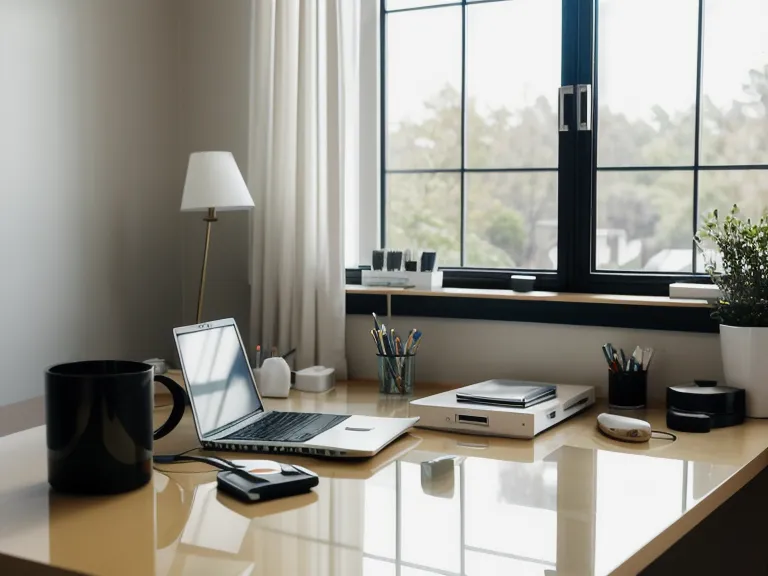
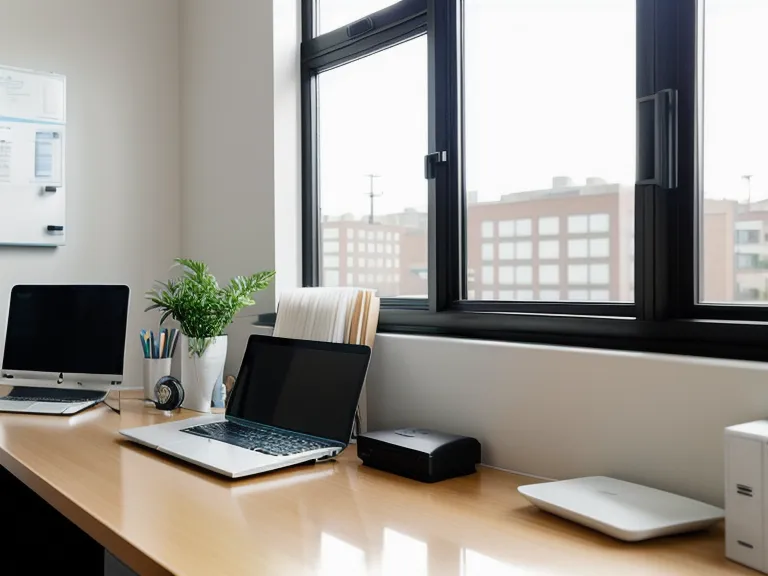
What actually worked wasn't more silence. It was a fixed anchor. My standing desk lives wedged into a corner of the living room in my rental, tucked under a bay window that actually gets decent light. Two monitors sit up at eye level, laptop closed and parked on its own arm so I'm not tempted to just hunch over the smaller screen. There's a half-dead pothos on the windowsill right above where my keyboard tray sits, though I should probably water it more, and my phone charges on the kitchen counter, a solid forty feet from the desk. That distance matters more than any app I've paid for.
Setting up a dedicated deep-work zone inside a shared living space is a whole project on its own — worth its own post, honestly — but the short version is that a consistent spot beats a quiet one. Some afternoons, when the anchor stops working, I just leave: a walk down to New Seasons Market on SE Division St clears more mental clutter than another notification-blocking extension ever has.
That's also where the audio-based tools earned their spot, not as a silence machine but as a consistent cue. The same track, roughly the same effect, every time I hit play.

Supplements as a Supporting Habit, Not the Fix
The Brain Song is the one that actually stuck for me. It's audio-based rather than a capsule, which sounds gimmicky until you realize it fits into a workday that's already full of headphones and Zoom calls anyway. I'm not going to walk through what's supposedly happening in your brain when you use it or list out ingredient mechanisms (that's its own reference topic), but the format mattered more to me than any ingredient list would have. What mattered was consistency: same cue, same headphones, same short stretch before I open the first ticket of the day, and that's when it actually helps, not randomly scattered through the afternoon.
Getting back into an actual coding flow after a scattered stretch is a different problem than getting focused in the first place, and I've written separately about how I rebuild my coding flow once it's broken instead of just trying to power through.
Where it actually earns its keep is in the gaps — the twenty, thirty, forty-five minutes between calls that used to be dead time because I couldn't ramp back up fast enough to get anything real done. Queuing up The Brain Song before a gap like that, instead of just staring at the calendar dreading the next call, is what turned those slivers into actual work time.
For heavier architecture sessions I lean on The Genius Song instead — it's marketed around a different kind of trigger, and flow-state triggers are their own can of worms I've unpacked in more detail elsewhere, so I won't rehash the mechanism here. On the rare week the fog gets stubborn anyway, I've kept Neuro-Thrive around as a budget-friendly backup.
None of this replaces actually managing your notifications. I wrote a whole separate piece on how to manage Slack notifications without losing your mind, because cutting the number of tabs and pings competing for your attention does more for cognitive load than most people give it credit for. I looked into something like NeuroPrime once too, for a particularly heavy project launch, though the premium price makes it a harder sell for daily use. That afternoon Zoom fatigue that hits like clockwork some days is a related but different failure mode (worth its own post) and treating it the same as morning brain fog is part of how people end up chasing the wrong fix.
The One Change That Actually Moved the Needle
Last Monday's standup, I ran through three sprint updates back to back without glancing at a single note card. That's not because my memory suddenly improved. It's because the friction that used to scatter my attention through the week just wasn't there to begin with. The single biggest thing I'd tell another remote dev chasing focus: stop treating it like a silence problem or a supplement problem, and start treating it like an environment problem. Fix the anchor first.
Clover Mensah, one of the regulars in the remote-work Discord I moderate, posts time-blocking breakdowns that look more like system architecture diagrams than a to-do list. It's honestly a better model than most productivity content gives people credit for. My own stack is less elegant: a dot-grid notebook for the daily blocking, The Brain Song queued up for the first real block of the day, phone in the kitchen with zero exceptions, and The Genius Song in reserve for anything architecture-heavy. None of it is fancy. All of it is repeatable, which turns out to be the actual requirement.
If you're stuck in the "just try harder" loop and want to test whether an audio-based approach can shortcut some of that mental resistance, The Brain Song is the one I'd point you to first. Not because it's magic, but because it was the easiest habit to actually keep. Fix the environment before you fix the willpower. The rest tends to follow.