
The Myth: Finish Everything, Then You'll Relax
My hands are still in a bowl of popcorn and I haven't tracked a single line of dialogue in twenty minutes. The show's on, my partner's next to me, and my brain is three hours away, camped out inside a client's checkout flow, debugging a loop I already closed the ticket on. I'm basically a ghost in my own apartment, if ghosts billed hourly. This is what remote work does to developer productivity when nobody ever teaches you how to actually stop.
Most advice about ending a workday assumes the same thing: clear your list, then your brain lets go. Finish the ticket, close the tab, walk away clean, and the wind-down — a meditation app, a walk, whatever — handles the rest. That's backwards for anyone who writes code for a living, and treating it as a work-life balance fix is how you end up haunting your own couch at night instead of watching the movie on it.
Part of the problem is what's actually happening in your head. It isn't tiredness so much as constant context switching that never gets a chance to switch back — Slack to code to Slack to whatever's on the TV, with no real gap in between. My upstairs neighbor, Yuki Stenberg, logs off at 5:01 PM sharp, every single day, no exceptions, and for a while I assumed that was because her job just had fewer moving parts than mine. It isn't. It's that she has an actual off switch, and I didn't.
Why the Home Office Never Actually Closes
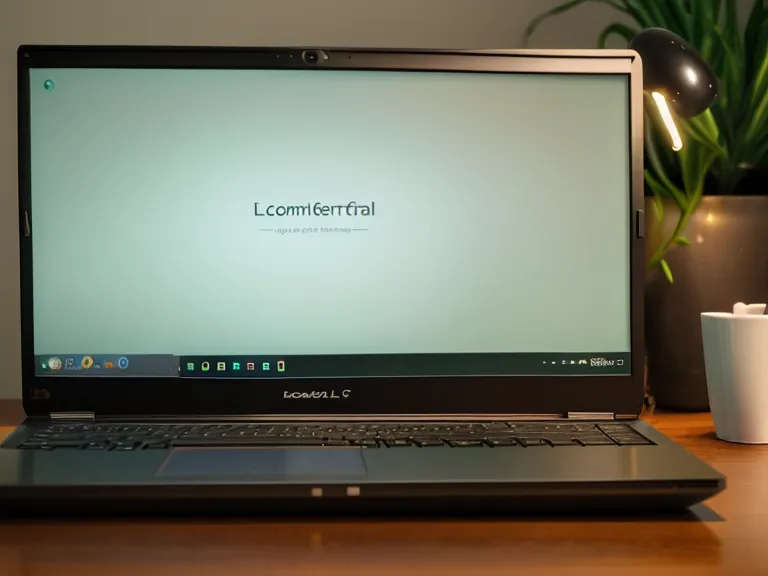
Here's the part nobody warns you about when you go remote: there's no commute, no elevator ride down, no door that clicks shut behind an office building. Nothing marks the boundary between the version of you that owes a client a bug fix and the version of you just trying to watch a movie — there's no deep-work zone that isn't also the room where the TV lives. I went remote in 2020 thinking I'd won something. What I actually lost was the psychological airlock, the stretch of walking or driving that used to tell my brain the day was over.
Eventually I had to rebuild my coding flow almost from scratch, and the fix turned out to have nothing to do with how I started my day. It was entirely about how I ended it.
The real context-switching cost of a home office with no walls isn't the few seconds it takes to reload a mental stack; it's the hour afterward, spent half-present, that never shows up on any timesheet.
Powering Through Isn't Burnout Prevention
There's a version of me that used to think the fix was just finishing more — clear the backlog hard enough and the rumination stops on its own. It doesn't. Work rumination isn't a queue you empty by working faster. It's a background process that keeps running whether the ticket's closed or not. Treating it like a to-do-list problem is how people end up confusing brain fog with just being lazy — they're not the same thing, and they don't deserve the same response.
I tried drowning it out first. Brown noise, binaural beat playlists, the whole audio arsenal recommended in every focus forum. For about two weeks it worked well enough that I told people about it. Then my brain filed the sound under background noise the same way it does a box fan, and the phantom coding came right back louder than before.

Leave One Thread Hanging on Purpose
What actually worked ran against every piece of productivity advice I'd read. Most of it tells you to clear your plate before you stop. For a developer, that's a trap: finish a feature completely and your brain goes hunting for the next problem, an idle process looking for work. So I stopped finishing on purpose. I lean on the Zeigarnik effect instead — the finding that unfinished tasks stick in memory harder than finished ones — and use that stickiness deliberately.
Before I close the laptop, I write down one small, deliberately unfinished thing in Notion — "fix the padding on the mobile nav," something quick enough that finishing it isn't the point. That note is a decision fatigue trick as much as a memory one: I'm not deciding where to start tomorrow, I already know. It's cognitive-load reduction in practice too — the thread stays on the page instead of looping in my head all night.
The Keyboard Thud
There's a specific sound my keyboard makes when a fix finally clicks into place mid-afternoon — a quick little double-tap as the last character of a working line lands — and for a long time that was the only satisfying sound my job produced. The shutdown ritual needed a sound of its own. Just as physical, but final instead of triumphant.
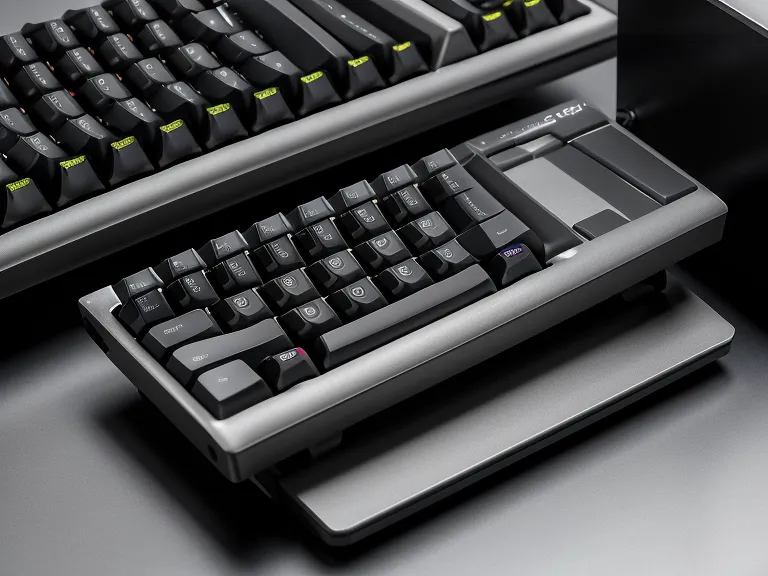
So at the end of a fifteen-minute wind-down: close VS Code, then slide the heavy mechanical keyboard — the kind that sounds like a typewriter and weighs about as much as a small laptop — under the monitor stand with a deliberate thud. The monitors go dark next. People chase flow-state triggers to get into deep work; I needed one just as reliable to get out of it, and a sound my own hands make turned out to work better than anything I downloaded.
Put the Phone Somewhere You Can't Reach It
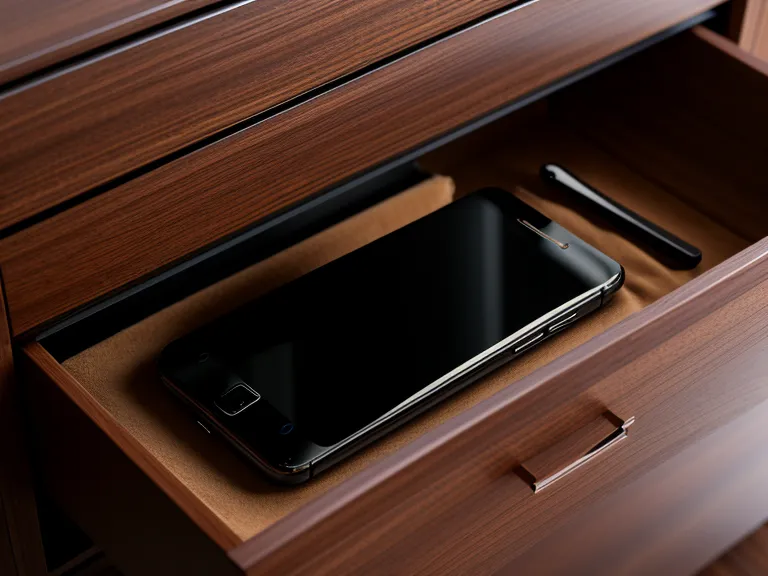
The harder half of the ritual is the phone. It goes in a drawer in another room, and for the first hour after work I'm unreachable — no Slack, no GitHub notifications, no "just checking one thing." The logic isn't complicated: your brain needs what's called Attention Restoration Theory, a genuinely low-stimulus stretch to recover from hours of high-intensity focus. It's the same kind of recovery your brain needs after a day stacked with video calls — the specific wrung-out feeling anyone who's dealt with zoom fatigue recognizes, even on a day they barely spoke.
Some evenings the fifteen minutes turns into a walk up the summit loop at Mount Tabor Park, phone left behind in the drawer, mostly because putting real distance between me and the router does something a closed laptop lid can't.
The Night the Itch Didn't Show Up
The clearest proof this works showed up on an evening I'd normally have spent picking apart bugs I hadn't fixed yet. Instead I ran the ritual — thud, dark monitors, phone in the drawer — and walked into the kitchen. About twenty minutes later I noticed I wasn't waiting for the phantom itch to check notifications anymore. I was just looking at what was actually in the fridge. My brain had genuinely gone offline. The same clarity showed up again reviewing a two-hundred-line pull request start to finish without once losing the thread. No scrolling back. No re-reading the same function three times just to remember what it did.
Not every night earns that kind of quiet, and I don't pretend the ritual is magic. Some nights it just means I stop ruminating fifteen minutes sooner than I would have otherwise. For a job with no natural stopping point built in, spending fifteen minutes on purpose beats losing the rest of the evening by accident.
It's a Container, Not a Cure
Honestly, none of this is a brain-supplement-timing trick, and there's no ingredient mechanism to point to — no capsule stack fixes a boundary problem, and I never ran anything close to a formal self-experiment baseline on it. I just noticed the difference the first time I felt it, no spreadsheet required.
Liesel Drummond, who's in the same remote-work Slack community I lurk in and spends her days designing focus-friendly home office layouts for other WFH developers, put it to me straight once: the desk was never the actual problem. A better chair or a nicer monitor arm doesn't touch the part of your brain that keeps compiling after hours — only a boundary does that. On nights I need my last deep-work block to actually wrap on time, I'll use something like the genius song to help close out the work itself faster, but that's just clearing the runway. The ritual is still what lands the plane.
Here's the actual rule, stripped of the mythology: don't wait for the list to be empty, and don't expect an elaborate wind-down to do what a fifteen-minute physical habit can do instead. Leave one thing visibly unfinished, build a real, physical, repeatable signal that the day is over, and put the phone somewhere that costs actual effort to reach. None of that requires new hardware or a perfect office. If you're currently haunting your own living room the way I used to, that's the whole fix — not more discipline, just a better shutdown sequence. And if focus problems are hitting hard enough that a ritual like this doesn't touch it, that's worth a conversation with an actual professional, not another app.
What you read here reflects my personal journey and opinions—not professional medical or productivity advice. Always do your own research and consult the appropriate professionals before making changes to your health or work routine.