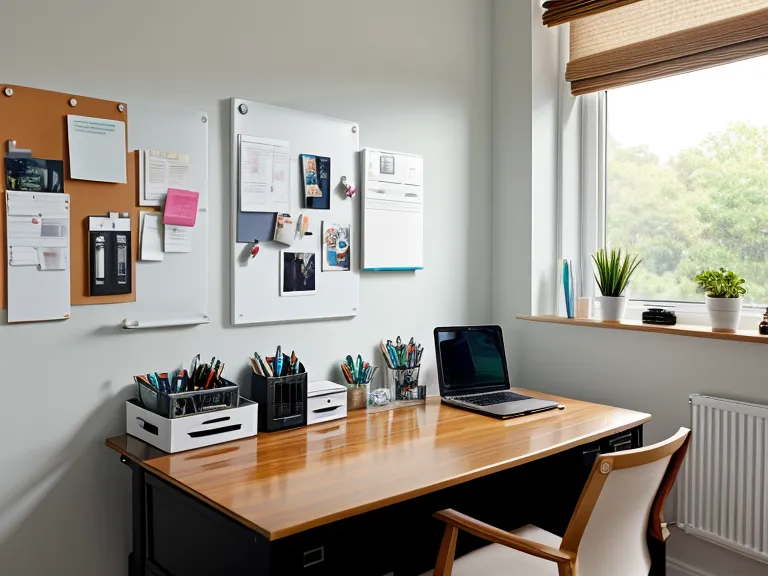
A standing desk locked at full height for eight straight hours looks like commitment. A desk that moves six or eight times before lunch looks like fidgeting. Only one of those actually held my focus together through a full remote work day, and it wasn't the one that looked more disciplined. That's the short version of what a year of testing standing desks, ergonomics tweaks, and assorted focus hacks taught me about building a productivity workflow that survives past 2pm.
Clover, one of the regulars in the remote-work focus-tracking Discord channel I run, DMed me a calendar screenshot a while back — full days blocked out, no gaps — and asked the question I get more than any other: stand the whole shift, or split it? I answered her from the checkout line at New Seasons Market on SE Division St, thumb-typing while the guy ahead of me argued about a coupon. I used to think it was a trick question. It isn't — it's the only question that matters if you want a standing desk to help with actual mental clarity instead of just being an expensive place to rest a laptop.
Full-Time Standing Versus the Split Shift
Approach A is simple: raise the desk once, stand for the whole shift, treat sitting as defeat. It's what I did early on, and it's still what most people try first. The problem isn't willpower. Standing that long pulls a chunk of your attention toward just staying upright and comfortable, and that's attention you don't get back for whatever you're actually supposed to be working on. By mid-afternoon my ankles ached, my lower back was done, and reading a stack trace felt like debugging in a language I used to know.
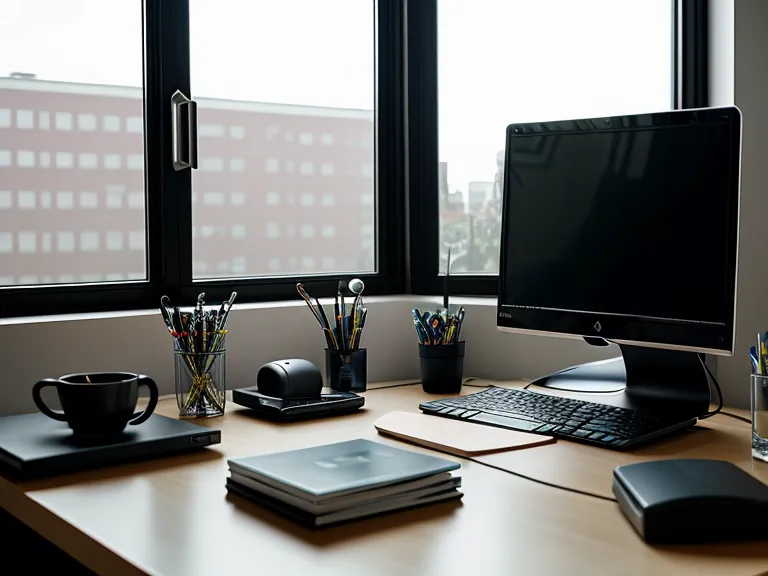
The split version looks messier on paper. The desk goes up for calls, down for deep work, up again for a stretch, down for whatever needs real concentration — sometimes eight or nine height changes in a single day. Context-switching has a real cost, the same way jumping between unrelated tickets in a sprint does, and I expected all that movement to just add friction on top of friction. It did the opposite. The height change itself became the switch, instead of one more thing competing with it.
Why Does Constant Standing Backfire on Deep Work?
Here's the part that surprised me. I assumed more standing would always mean more alertness, the same way I assumed more caffeine always meant more output. Neither holds up. Zoom fatigue is real on its own — the specific brain-drain that comes from a string of back-to-back calls — but locking yourself into one posture for a full shift trades that problem for a different one. You're not sitting-fogged anymore. You're just tired in a different location. I have zero medical training here, so if you've got back or joint issues, that's a conversation for an actual professional, not a freelancer with a blog.
Honestly, none of this came from a single aha moment. I ran a strict keto stretch for about ninety days at one point, hoping it would fix the fog at the source. It worked, kind of, for the first few weeks — then crunch months hit, keto and client deadlines turned out to be incompatible, and I was back to eating like a normal person within a season. What that experiment actually taught me had nothing to do with food and everything to do with tracking: you need some kind of self-experiment baseline before you can tell whether a change is doing anything, or whether you're just telling yourself a nice story.
Does a Motorized Standing Desk Beat a Fixed-Height Setup?
Short answer: it depends on whether you'll actually use the range. A motorized desk switches height in about the time it takes a Slack notification to distract you, which matters if the whole strategy depends on switching often. A crank or pin-adjustable desk works fine if you're only changing position once or twice a day, but the friction of standing there cranking a handle is exactly the kind of friction that kills a new habit before it sticks. I cleared the clutter off my own desk for a related reason — cables, mugs, whatever was in the way — because cutting that kind of cognitive load matters more than which motor you buy. I've written before about how to reduce decision fatigue as a remote freelance developer, and the same logic applies to a cluttered desk.
Building an Ergonomics Routine That Actually Sticks
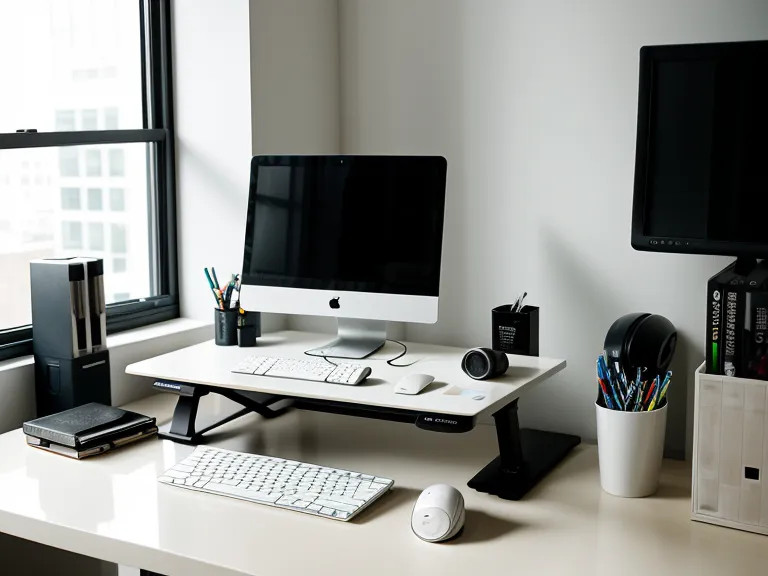
If you're currently hunched over a laptop at the kitchen table, don't go full-stand on day one — you'll hate it and your output will show it. Start with short blocks, something like twenty minutes at a time, and use them for the parts of the day that don't need deep concentration: a stand-up call, clearing out a Slack backlog, replying to email. Get a decent mat if you're on hardwood, because sore feet undo the whole plan faster than anything else. Keep your monitor at eye level once you're standing — a laptop riser or a monitor arm handles that — because trading lower-back pain for neck pain isn't a win. And don't lock your knees and go still. Shift your weight, use a footrest, keep the standing itself as close to effortless as possible so your attention stays on the actual work instead of on your own posture.
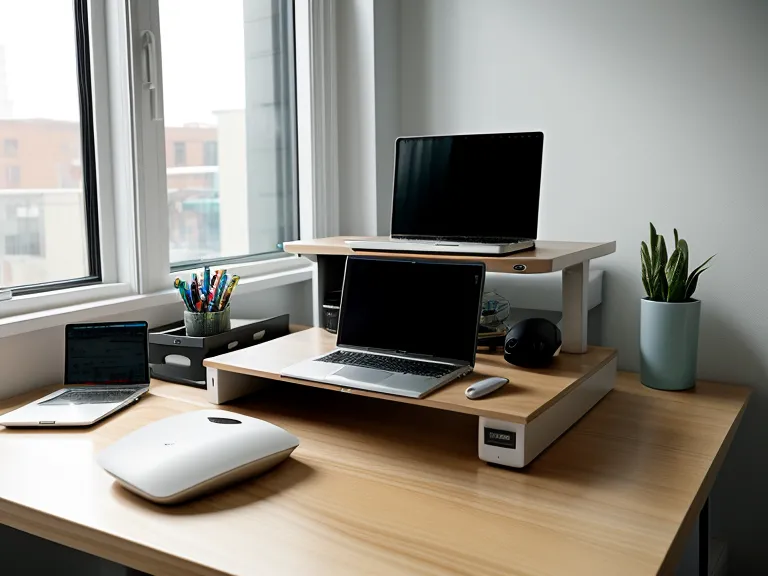
The height change works as a trigger, not just a stretch break. Flow-state triggers are usually described as elaborate rituals, but mine is just moving the desk — the sound alone tells my brain a deep-work block has started, the same way opening VS Code full-screen used to. Standing height gets reserved for what I'd call manager-mode tasks: calls, quick UI fixes, sorting a Notion board. Sitting gets reserved for anything that needs a real deep-work zone — a gnarly bug, a proposal that needs actual sentences, anything where getting interrupted costs more than a few seconds.
One clear proof: the day I drafted an entire client proposal front to back in one sitting — no half-finished tab-switch to check Slack, no standing up to shake out my legs halfway through. That doesn't happen on the full-standing plan. It barely happened before I owned a desk that changed height at all.
The Trade-Off: When to Stand, When to Sit for Focus
So here's the actual trade-off, not the marketing version. Stand for anything short, social, or low-stakes — calls, quick replies, the stuff that benefits from a little restlessness. Sit for anything that needs sustained attention, where the cost of your brain half-tracking your balance is higher than the cost of staying still. That's it. That's the whole system, and it cost me a desk motor and some trial and error, not a subscription or a supplement stack. I still mess with when I take focus supplements relative to my work blocks — that's a whole separate rabbit hole, and so is what's actually in them, which deserves its own investigation rather than a paragraph here. And brain fog is not laziness, which is worth remembering before you blame yourself for a slump that's actually just your body asking for a change of position.