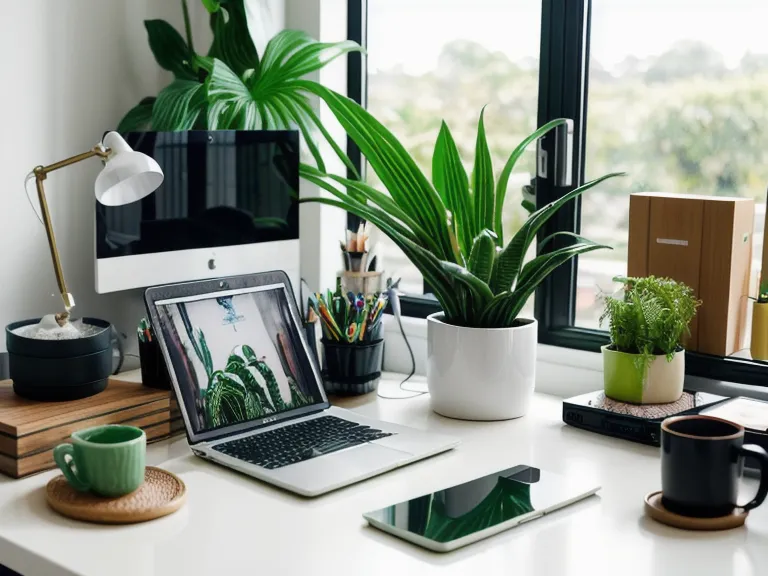
Six plants. That's what the math came out to once I ran my square footage through a NASA air-quality formula, back when I was trying to figure out why my brain felt like it was swapping memory to disk by mid-afternoon. My home office is barely six hundred square feet, and I'd started to suspect the indoor air quality in that room was part of the problem, not just my Slack notifications.
Quick disclosure before the plant talk: a couple of links below are affiliate links, including for an audio-based focus tool I get into later. If you buy through them, I earn a small commission at no cost to you. I only write about gear and routines I've actually run through a real workday, not stuff pulled from a spec sheet.
I'd been remote long enough that the specific flavor of afternoon fog already had a name in my head before I ever looked up Sick Building Syndrome — the kind where you're staring at a component you wrote yourself an hour ago and it might as well be written in a language you don't speak. Some of that is plain Zoom fatigue stacking up across a day of back-to-back calls; some of it, I started to suspect, was the room itself. Volatile Organic Compounds from cheap furniture and carpet can quietly mess with focus and air quality, and once I read that Benzene shows up in more rental-apartment furniture than anyone advertises, the air itself started to feel like a variable worth isolating instead of ignoring.
Before I bought a single plant, I logged a baseline the way I'd log a baseline for any experiment at work: no changes yet, just data. My desk sensor showed CO2 creeping toward 1,000 ppm by early afternoon, against an outdoor baseline of around 400 ppm — I was, in a literal sense, marinating in my own exhale for eight hours a day. That baseline is what made the rest of this worth trying.
How Many Plants Does a Home Office Actually Need?
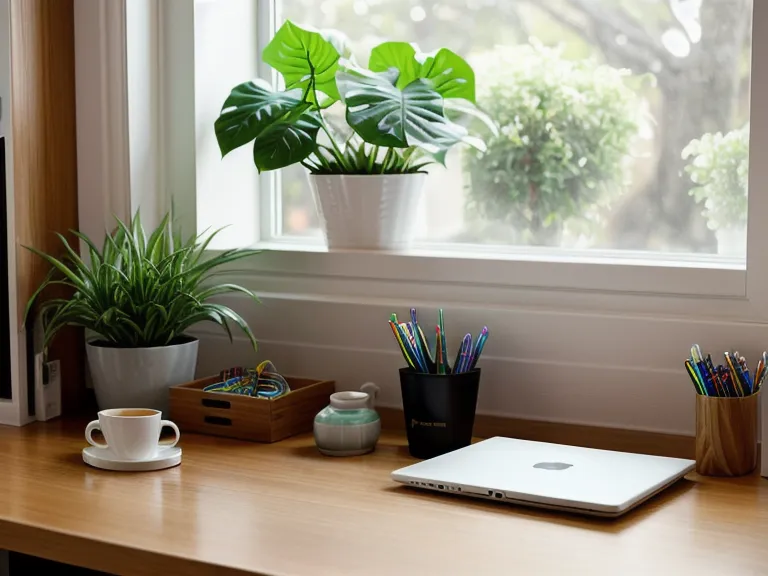
The NASA Clean Air Study everyone cites suggests roughly one plant per 100 square feet to make a real dent, which for a 600-square-foot apartment meant six plants, not one dying succulent by the window. Humidity mattered just as much as CO2 — the EPA's general guidance puts indoor humidity somewhere between 30 and 50 percent, and mine usually sat below 20 percent once the heater kicked on for a Portland winter.
Snake plant became the anchor of the setup, mostly because it keeps working overnight instead of shutting down like everything else in the room does, plants included. I won't pretend to understand the full mechanism — that's a rabbit hole for someone with a biology degree, not a JavaScript one — but a few months in, my hygrometer had climbed to around 35 percent and my sinuses stopped feeling sanded down by dry winter air.
Next to it went a spider plant, mostly for the formaldehyde numbers and because it propagates faster than I keep up with client work. Some mornings the room got quiet enough that the only sound left was the router humming faintly in the corner — everything else had just stopped being a problem.
The Fern Phase That Didn't Fix My Focus
A few weeks in, I overcorrected. I spent a weekend pricing out exotic ferns and ended up eyeing about $150 worth of high-maintenance ones online, and realized I still hadn't opened my editor all morning. The ferns needed constant misting and exact light angles, which is a strange kind of maintenance to take on when the entire point was reducing the number of things demanding your attention. That's about when a friend, Devraj — a former coworker from an old in-office job — caught a glimpse of my desk on a video call and asked, flatly, whether I was starting a nursery or avoiding a deliverable.
He wasn't wrong. Chasing plant care had become its own kind of context-switching cost, another tab open in my head competing with actual client work, and it was blurring into the same territory covered in brain fog vs laziness — the blurry line between genuinely can't focus and finding elaborate ways to avoid the hard part. Looking at leaves can lower stress, sure, but a jungle in the corner of a rental apartment was never going to replace an actual air purifier, and it definitely wasn't going to replace opening the editor and starting to type.
Bringing In Sound After the Soil Stopped Being Enough
By the time the plants had done what they were going to do, I still had a cognitive load problem sitting on top of a solved air problem. I'd already tried better desk lighting, which helped the eye strain but did nothing for the part where my attention kept sliding off a task mid-sentence. Cutting cognitive load somewhere else in my setup — fewer browser tabs, fewer notification sources — helped some, but the room could only do so much of the work for me.
The actual shift came from combining the environment fixes with something audio-based. I started using The Brain Song during coding blocks that needed real concentration, less because I trusted an audio track to do anything dramatic and more because it didn't ask me to remember a pill schedule or a misting routine; I just put headphones on. Timing turned out to matter more than I expected: running it first thing, before the inbox opened, worked better than trying to use it to rescue an afternoon that had already gone sideways. If you're already sitting in a room full of plants and still can't hold a thought for more than ten minutes, The Brain Song is worth testing before you assume the problem is just you.
For denser problems — the kind of logic work that needs full working memory, not just quiet — I'd reach for The Genius Song instead. There's a longer breakdown elsewhere of the actual flow state triggers involved; here it's enough to say the combination of a cleaner room and the right audio cue is what actually moved my numbers, not either piece alone. About four weeks into running the two systems together, I sat down to draft a proposal for a new client and didn't stand up again until it was finished; no stray tabs, no wandering off to check something irrelevant, the whole thing done in one sitting.
The Low-Maintenance Lineup That Actually Survived
If you're building your own version of this setup, skip my fern mistake and stick to plants that forgive neglect. The snake plant is the obvious anchor — nearly indestructible, and one of the few that keeps producing oxygen overnight instead of clocking out with everyone else. Spider plants are close behind, good at pulling formaldehyde out of the air and easy enough to propagate that you'll have extras to give away within a season. If your desk sits in a dim corner with no real window, a ZZ plant will outlast almost anything else you try there, and pothos gives you that fuller, jungle-adjacent look fast without demanding much beyond an occasional watering.
Check toxicity before you commit to any of these if you've got pets around — several are mildly toxic to cats or dogs, and that's worth five minutes with a vet or a reputable plant database before you fill a shelf with them. None of this requires a green thumb so much as picking things that survive the weeks you forget they exist, which, if you work from home, will happen more than you'd like to admit.
So, What Actually Changed by Week Four?
Before any of this, I'd tried a cold shower every morning at 6am for a while, hoping it would reset something. It gave me a genuine jolt for about twenty minutes and did absolutely nothing for the 2pm crash that showed up right on schedule regardless. That's the closest thing I have to a warning label for this whole post: environment and routine fixes only work on the problems they're actually built for, and a cold shower was never going to fix stale air any more than a snake plant was going to fix bad sleep.
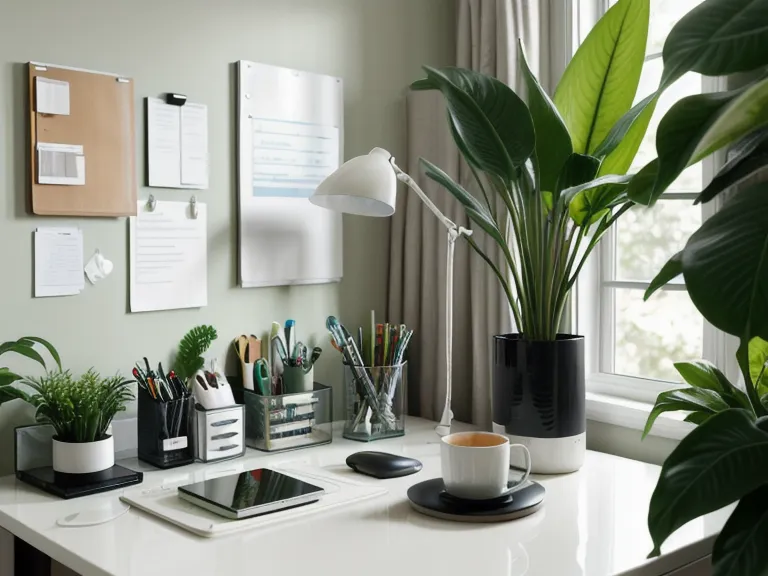
Some afternoons I still take a break by walking a lap around the rose garden blocks in Ladd's Addition, mostly because stepping outside resets something a desk plant can't, since my apartment isn't really a deep work zone in the way a dedicated office would be, it's a living room doing double duty, and I've stopped expecting six houseplants to fully solve that structural problem. What they solved was narrower and more useful: cleaner air, steadier humidity, one less thing quietly working against my attention.
I'm not going to pretend I understand the ingredient-level mechanics behind every focus tool on the market; that's a much longer post for someone with more patience for label copy than I have. The actual lesson is simpler, if a little unglamorous: test the room before you test yourself. Fix the boring, physical stuff first — air, humidity, light — because it's cheap and reversible, and only then figure out whether you still need something layered on top. It's a boring answer to what sounds like a productivity question, but it's the one that held up. If you've already done the plant thing and you're still hitting a wall most afternoons, my deep work experiment goes further into what I tried after the easy fixes stopped being enough.