
Forgetting where I set my phone down and forgetting how to start the pull request I opened an hour ago are not the same malfunction, even though most brain-health marketing lumps them into one pitch. One is a storage failure. The other is a routing failure, a focus failure, not a memory one. Three years into remote work, it took me the better part of a year testing focus and memory supplements before I understood why fixing one almost never touches the other.
Quick disclosure before we go further: some of the links below are affiliate links, and if you buy through one, I get a small commission at no extra cost to you. I only write about tools I've actually run through real coding sprints and real deadline weeks. I'm not a doctor, not a neuroscientist, just a developer who got tired of feeling like his brain was running on a throttled connection. Check with an actual doctor before you start changing your own brain chemistry; everyone's setup is different.
Where Memory Actually Breaks Down
Real memory failure looks specific: you re-read the same Jira ticket four times and the words don't stick, or you walk into the kitchen and blank on why. That's working memory — the small amount of stuff you can hold active in your head at once — failing to load, not information getting deleted. It's a different lever than the one that decides whether you actually open the file. Confusing brain fog with laziness makes this worse, because from the outside they look identical: someone staring at a screen, not typing. One is a genuine processing problem. The other is a motivation problem. Neither responds to being told to just focus harder.

Focus Fails Remote Workers in a Completely Different Way
Developers live and die by Flow — that stretch where a problem and your attention line up and time stops mattering. Remote work is a minefield for it. One minute you're deep in a logic puzzle, the next you're answering a "quick" Slack message about a meeting that could've been an email. Context switching has a real cost — every ping that pulls you out of a function mid-write charges you for the run-up back to where you were, not just the interruption itself. Working out of a living room raises that tax further, because the "context" you're switching out of isn't just work; it's the dishes, the mail, the fridge, all visible from your desk. Cutting down the number of browser tabs and half-finished side quests open at once does more for available bandwidth than anything you can swallow.
None of this is a memory problem. A double-shot of espresso to power through a focus gap taught me that the hard way once — shaky hands, a racing heart, and still zero lines of code written. Four consecutive Zoom calls do something similar without the caffeine: a heavy, dull pressure behind the eyes that turns the text on your screen to soup, which has nothing to do with recall and everything to do with a system asked to context-switch too many times in a row. The crash that follows mid-afternoon is its own animal too, more physical than cognitive, closer to low blood sugar than a broken attention span. No audio track or capsule fixes that by itself.
Testing Supplements Without Fooling Yourself
Once I accepted the problem was focus and not memory, I went looking through the nootropics rabbit hole — premium stacks, individual powders, budget options like Neuro-Thrive, which has been around long enough to have a real track record but never quite hit the mark for what I needed. What's actually inside each capsule, and why any of it is supposed to work, is its own separate rabbit hole I'm not going to get into here. What I did figure out is that none of it means anything without a baseline — a normal week logged before changing a single variable, so you're not just guessing whether a new capsule or playlist did anything at all. If you want the log I used to start measuring that, I wrote up Why I Started Tracking My Focus Hours Like My Billable Hours, which changed how I think about attention as a budget instead of an infinite tap. Timing matters too — when you actually take something relative to your first deep work block turns out to matter almost as much as which product you picked, and most people skip that step entirely.

The Actual Effect of Audio-Based Focus Tools
I'd tried the sound route before, sort of — brown noise and binaural beat playlists that worked for exactly as long as they were novel, then dissolved into background static I stopped noticing at all. What changed things was controlling the soundscape on purpose instead of leaving it to whatever the apartment happened to be doing. Even the quietest room still has a floor to it: a router humming faintly from another corner, only noticeable once everything else has gone still. Noise-canceling headphones for deep work blocks were already part of my setup, so trying The Brain Song wasn't a huge leap. It removes the friction a pill routine adds — you don't have to remember to swallow anything at a specific hour, you hit play when the IDE opens, and the trigger itself becomes part of what tells your brain a flow block is starting. That's the real mechanism behind most flow-state tricks: a consistent cue, repeated enough times that your brain stops needing convincing. I kept The Genius Song in rotation too, for the days I needed something to compete with the visual noise of a shared living space rather than just the audio kind.
None of this replaces dealing with actual eye strain. Staring at two monitors for most of a workday compounds every problem above, and that's a separate fix from anything you'd hear through headphones — I wrote more about that angle in reducing mental fatigue from screen time. Audio isn't magic here. Removing friction from a routine just makes it more likely to survive a bad week, and a tool you'll actually use consistently beats a theoretically superior one you abandon by the second try.
Building a Deep-Work Zone Nobody Else Enforces For You
Liesel Drummond, someone I know through a Portland-area remote-work Slack community, spends part of her time now helping other remote workers design an actual deep-work zone out of whatever corner of an apartment they've got — proof this isn't a problem you have to solve alone. My upstairs neighbor Yuki takes the opposite end of the same idea seriously: they log off at 5:01 PM sharp, every single day, no exceptions, which is a shutdown boundary I still haven't managed to build for myself. Somewhere between those two habits — a defined zone to start in and a hard line to stop at — is where focus actually gets protected. Neither one comes in a bottle.
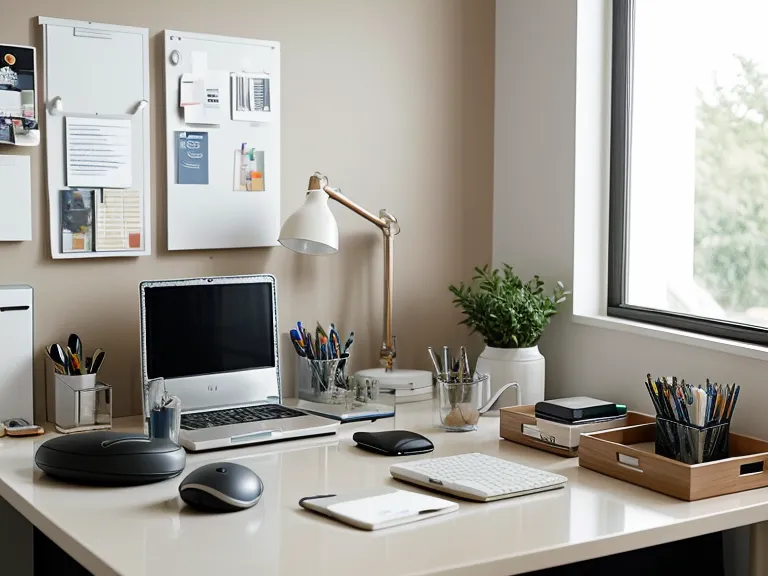
A budget option like Neuro-Thrive might be enough if what you're chasing is pure recall rather than the ability to start. That's a real, useful distinction, just not the one most remote developers are actually stuck on. Part of my own routine now starts before the laptop even opens: getting real daylight on my face first, which does more to anchor the rest of the day than anything that comes in a capsule or a track. I wrote about building that into a full morning routine if you want the longer version.
So Which One Do You Actually Have?
Here's the actual test, the short version: if you can recall the task perfectly but can't make yourself start it, that's focus, not memory. I know because I've sat with a full coffee mug two hours into a session, task perfectly clear in my head, cursor blinking on an empty function, unable to make the first move. If you genuinely can't remember what you were supposed to be doing at all, that's a different fix, and no audio track is going to solve it. Most remote developers I've talked to have some mix of both, which is exactly why marketing that treats "brain supplements" as one category is misleading — you end up buying the wrong tool for the failure you're actually having.
If the audio-based route sounds worth testing for your own workflow, The Brain Song is the one I'd point you to first — it's been the lowest-friction addition to my setup this year, cheaper than most of the capsule options, and it doesn't ask you to remember to take anything. It's a tool, not a fix. You still have to open the file yourself. It just makes that first move easier when your brain isn't actively working against you.